

Technology has transformed the way freight is moved across the country. This is particularly important in such high-volume markets as California, where port congestion and tight delivery windows make visibility in real time a must. Digital platforms have transformed trucking, brokerage, and freight operations that were once manual sync and analog methods of operation.
From live monitoring and automated freight matching to smart route planning and integrated communication, technology is eliminating long-standing inefficiencies and enabling new profitability opportunities. For carriers, brokers, and shippers, these innovations are not just conveniences; they are critical competitiveness enablers in an increasingly frantic market.
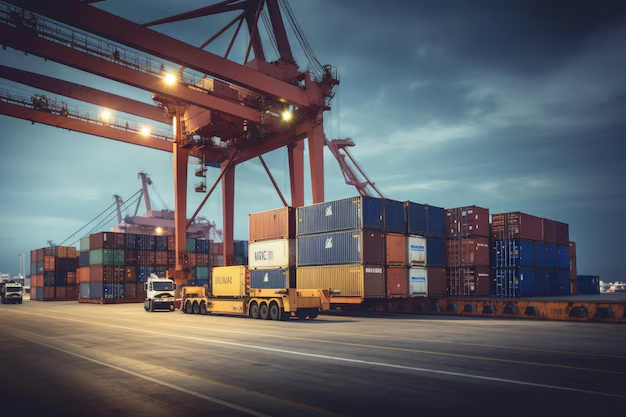
In this blog, we will discuss how such features improve efficiency for a logistics company in California and how Roadies Inc. uses advanced technology to deliver safer, faster, and more transparent logistics services.
Advanced Transportation Management Systems
Not long ago, trucking and brokerage offices ran on controlled chaos. Dispatchers balanced disconnected spreadsheets, critical rate confirmations vanished in crowded inboxes, and covering a load meant hours on the phone chasing capacity. Manual load boards and paper-driven processes slowed everything down. The result? Missed opportunities, compliance risk, delayed billing, and frustrated customers. Today’s Transportation Management System (TMS) acts as the central nervous system of a trucking operation.
One Platform. Total Visibility. Full Control.
A modern TMS mobilizes dispatch, safety compliance, document management, carrier onboarding, rating, invoicing, and reporting into a single pane of operational glass.
No more switching from one software tool to another, your team operates out of a single command center. That consolidation prevents double data entry, reduces errors, and makes sure that everyone, from dispatch to accounting, is working off the same real-time data.
Operations are also bolstered with automation for repetitive tasks such as carrier vetting, load tendering, appointment scheduling, and rate confirmations. You’re not having to push paperwork; your team can get out there and manage freight strategically.
Real-World Performance Gains Across the Supply Chain
When implemented correctly, a TMS doesn’t just streamline workflows, it transforms performance metrics:
- For shippers: Quotes are generated in minutes, not hours. Booking confirmations move fast, keeping docks fluid and supply chains predictable.
- For brokers: Loads get covered significantly faster by automatically filtering carriers based on safety scores, insurance compliance, authority status, and preferred lanes.
- For carriers: Faster documentation processing and billing cycles mean improved cash flow and fewer administrative headaches.
A properly deployed TMS shifts your California logistics service from reactive firefighting to proactive freight management, giving tech-enabled fleets and brokerages a measurable edge over competitors still relying on legacy systems.
AI in Trucking: Smarter Freight Decisions
When most people hear “AI in trucking,” they picture driverless trucks cruising down I-5. While autonomous technology continues evolving, the real transformation is already here: AI that enhances human decision-making and optimizes freight performance in real time.
Route Optimization That Protects Margins
AI-powered route optimization continuously evaluates traffic congestion, weather disruptions, construction zones, fuel stops, HOS constraints, and delivery windows. Instead of reacting to delays, fleets can proactively reroute drivers before they hit gridlock, reducing fuel consumption and improving on-time delivery rates—critical metrics for any logistics company in California navigating the state’s notoriously congested highways.
The payoff is measurable:
- Reduced fuel burn
- Improved on-time delivery percentages
- Lower detention exposure
- Better driver utilization
For operations running high-volume freight through heavily congested corridors, intelligent routing directly protects margins.
Data-Backed Pricing That Strengthens Negotiations
Predictive pricing tools analyze lane history, seasonal demand swings, fuel trends, and spot market volatility. Brokers and carriers no longer rely solely on instinct; they negotiate with real-time market intelligence.
This reduces friction in rate discussions, aligns expectations, and protects profitability for both sides of the transaction.
Automated Document Intelligence
AI-driven document processing tools scan Bills of Lading, Proofs of Delivery, lumper receipts, and inspection reports. These systems extract critical data instantly, pushing it into billing workflows without manual keying.
The impact:
- Faster invoicing
- Reduced billing errors
- Quicker factoring cycles
- Cleaner audit trails
In a business where margins are tight, cutting back-office processing time directly benefits working capital.
Real-Time Visibility: Eliminating the Freight “Black Hole”
No More “Somewhere Near Fresno” Updates
For decades, freight visibility ended once a truck left the dock. Shippers would call dispatch and receive vague updates. Planning teams were left guessing. Customers were left waiting. However, with advanced tracking systems, those struggling days are over.
Meter-Level Tracking and Live ETAs
Modern Electronic Logging Devices (ELDs) integrate with GPS and trailer tracking technology to provide highly accurate location data. Customers can now log into live tracking portals to see shipment progress in real time, with ETAs that automatically adjust based on traffic conditions.
This level of transparency improves dock planning, labor scheduling, and overall supply chain coordination.
Cold Chain Protection for High-Value Freight
For refrigerated operations, IoT-enabled sensors continuously monitor trailer temperature and humidity levels. If conditions move outside compliance ranges, drivers and dispatch receive immediate alerts.
For a California logistics service handling perishable goods, whether produce from Central Valley farms or pharmaceuticals requiring strict temperature control, this technology prevents spoilage claims and ensures compliance with Food Safety Modernization Act regulations.
Predictive Maintenance That Prevents Roadside Breakdowns
Connected vehicle sensors monitor engine diagnostics, tire pressure, brake systems, and other critical components. When performance data signals potential failure, maintenance can be scheduled before a breakdown occurs.
Preventative action reduces:
- Costly roadside repairs
- Missed delivery appointments
- CSA exposure
- Equipment downtime
Keeping trucks rolling is the foundation of profitable fleet operations.
Digital Freight Matching: Turning Empty Miles Into Revenue Miles
Deadhead miles are pure margin killers. Every empty mile burns fuel, consumes driver hours, and generates zero revenue. Historically, minimizing deadhead required strong broker relationships, constant phone calls, and a bit of luck securing backhauls.
Smart Matching in Seconds
Digital freight matching platforms analyze available truck capacity and open loads simultaneously. When a driver finishes a delivery, the system identifies reload opportunities aligned with their location, equipment type, and preferred lanes, often within seconds.
A Three-Way Win for the Industry
- Carriers: Higher revenue per mile and improved asset utilization
- Shippers: Expanded access to available capacity
- Industry-wide sustainability: Fewer empty miles mean lower fuel consumption and reduced emissions
Improved matching technology strengthens the entire freight network, not just individual companies.
Technology + Experience: The Formula That Wins Freight
Software, sensors, and algorithms drive efficiency, but they don’t replace industry expertise. When a receiver closes early, weather shuts down a corridor, or a load requires special handling, experienced logistics professionals step in.
The Roadies Inc. Commitment to Smart Operations
At Roadies Inc., technology enhances our team’s capabilities; it doesn’t replace them. Drivers use real-time traffic intelligence to protect delivery windows. Dispatch leverages TMS visibility to coordinate complex moves. Our brokerage services rely on market analytics to negotiate with confidence. The result is a logistics operation that combines precision technology with real-world trucking expertise.
Wrapping Up
Technology is not a differentiating factor in trucking anymore-it’s a requirement to stay in business. From TMS automation to AI-driven routing and real-time freight visibility, today’s logistics require system smarts with team smarts. The companies that lead with innovation also move freight faster, protect margins, and provide the transparency that today’s supply chains demand. Looking to simplify your business and get a measurable leg up? Get in touch with Roadies Inc. today for a quote on your next Full Truckload or refrigerated shipment across California and beyond.

FAQs
What logistics technologies improve freight visibility in California the most?
Typically, real-time GPS tracking plus milestone updates (pickup/in, transit/delivery), automated ETAs, and exception alerts make the most significant immediate difference.
How does a TMS benefit shippers or brokers?
A TMS is a centralized platform for planning and execution. It allows you to assign loads more quickly, cut down on manual follow-ups, and standardize status updates and documentation.
What is the difference between shipment tracking and exception management?
Tracking is about the location of the cargo; exception management finds the problem (delay, missed appointment, dwell time) and sets off an action plan and notifications.
How can technology reduce detention/demurrage risks near ports and busy facilities?
Meeting scheduling software, geofencing, proactive delay alerts, and fast digital document/POD handling enable different departments to react earlier, thus avoiding unnecessary charges.
