
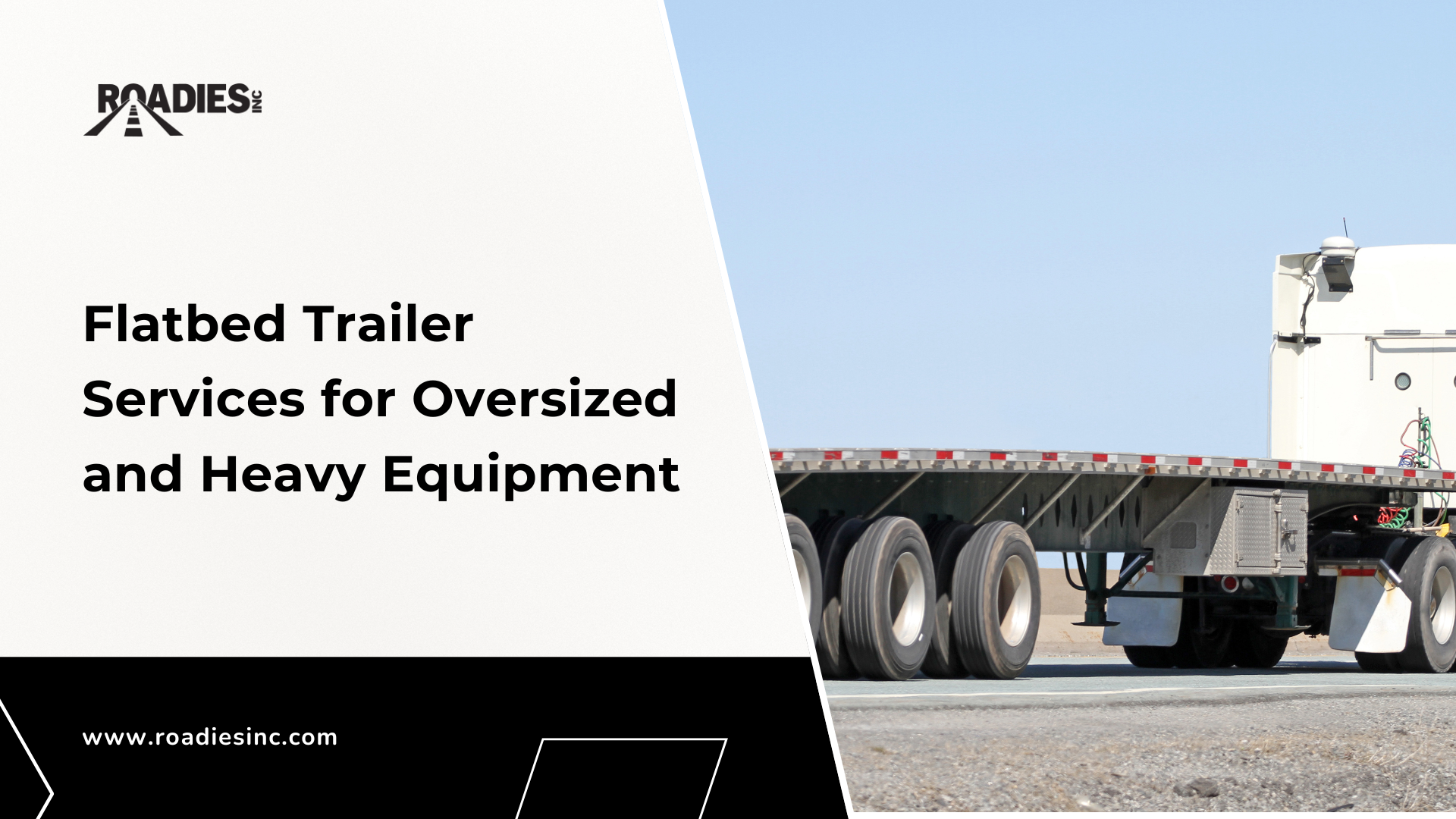
Moving oversized and heavy equipment can be a logistical nightmare for businesses in the construction, agriculture, and industrial sectors. Standard trucks often cannot accommodate large or irregularly shaped machinery, causing delays, higher costs, and safety risks. Flatbed trailers solve this challenge by offering open-deck transport that allows flexible loading, secure positioning, and safe transit of heavy equipment. In this blog, you’ll learn everything about flatbed trailer services, including the types of equipment transported, key advantages, safety measures, legal requirements, and tips to choose the right service provider in California.
What Are Flatbed Trailer Services?
Flatbed trailer services are intended to move heavy and oversized equipment that can’t be transported with ordinary enclosed trucks. The services involve open-top trailers that are without sides or roofs, thus making them suitable for the transportation of large, wide, or even tall machines. Flatbed trailers make loading and unloading easy with cranes or forklifts from several directions. They are mainly for construction, industrial, agricultural, and infrastructure equipment. Expert flatbed service suppliers also take care of everything from route planning and load securing to the obtaining of permits and ensuring compliance with the regulations, thus guaranteeing that the heavy and oversized equipment is transported according to the law by a safe and efficient means.
Types of Oversized and Heavy Equipment Transported Using Flatbed Trailers
Flatbed trailers are ideal for moving oversized and heavy equipment because their open design allows flexible loading, secure positioning, and safe transit. They can accommodate irregular shapes and weights, making them perfect for construction machinery, industrial equipment, agricultural machines, and long structural components.
1. Construction Equipment
Construction machinery often exceeds standard transport dimensions and requires specialized handling. Flatbed trailers are ideal for moving:
- Excavators
- Bulldozers
- Wheel loaders
- Backhoes
These machines are heavy, wide, and tall, making flatbeds the safest and most efficient transport solution.
2. Industrial Machinery and Generators
Flatbed trailers are the most common mode of transportation for large industrial machines and power generators due to their heavy weight and sturdy construction. Equipment such as compressors, turbines, and manufacturing units needs to be placed securely and cannot be moved without the strong load-securing methods that flatbed trailers offer.
3. Agricultural Equipment
Agricultural machines are commonly larger than necessary and built for open-field conditions; consequently, their transport inside a truck is not practical. Flatbed trucks are used for moving:
- Tractors
- Harvesting machines
- Plows and seed drills
By means of these trailers, it is possible to load and unload easily at farms and rural areas that do not have docks for loading.
4. Steel Structures and Prefabricated Components
Flatbed trailers are well-suited for transporting long and heavy construction materials such as steel beams, pipes, and prefabricated building sections. Their open deck supports extended loads and allows proper weight distribution for safe transit.
5. Mining and Energy-Sector Equipment
Equipment used in mining, oil, gas, and energy projects is often extremely heavy and irregularly shaped. Flatbed trailers are used to transport drilling equipment, transformers, and large mechanical components that require specialized securing and route planning.
Each type of equipment requires a specific trailer configuration, load-securing technique, and transport strategy. Flatbed trailers provide the flexibility and strength needed to safely move oversized and heavy equipment over both short and long distances.
Safety Measures and Legal Requirements for Flatbed Heavy Equipment Transport
Transporting oversized equipment requires strict safety protocols and adherence to transportation laws. Professional flatbed trailer services prioritize both equipment protection and public road safety.
Essential safety and compliance measures include:
- Heavy-duty chains, binders, and straps
- Proper weight distribution and load balancing
- Oversize load permits and route approvals
- Warning signage and reflective markings
- Escort or pilot vehicles when required
These measures help prevent load shifting, accidents, and legal violations. Permit requirements vary by state and load dimensions, making professional planning essential. Experienced providers manage all compliance aspects to ensure smooth, uninterrupted transportation.
How to Choose the Right Flatbed Trailer Service Provider
The right flatbed trailer service provider ensures your oversized or heavy equipment is transported safely, legally, and on time. These are the important factors you should consider:
- Proven experience with oversized loads
- Availability of multiple trailer types
- Knowledge of California transport regulations
- Comprehensive insurance coverage
- Transparent pricing and timelines
A reliable provider manages permits, route planning, and safety coordination while maintaining clear communication throughout the process.
Conclusion
Flatbed trailer services are essential for safely and efficiently transporting oversized and heavy equipment that standard trucks cannot handle. With open-deck trailers, versatile loading options, and compliance with safety and legal standards, flatbeds reduce handling risks, save time, and ensure secure delivery. They are ideal for construction, industrial, agricultural, and energy-sector equipment. For reliable trailer transport services in California, contact Roadies Inc today to schedule your heavy equipment transport safely and on time.
Flatbed Trailer Services: Common Questions Answered
1. What is a flatbed trailer, and how does it work?
A flatbed trailer is an open-deck truck used for oversized or heavy equipment. It allows loading from multiple directions and ensures the secure transport of irregularly shaped machinery.
2. What types of equipment can be transported using flatbed trailers?
Flatbed trailers transport construction machinery, industrial equipment, agricultural machines, steel structures, and mining or energy-sector equipment, accommodating oversized and heavy loads efficiently.
3. Why choose flatbed trailer services over standard trucking?
Flatbeds handle oversized, tall, or irregular-shaped loads safely. Their open design allows easier loading, faster transport, and reduced risk of equipment damage compared to enclosed trucks.
4. Are there legal requirements or permits for flatbed transport?
Oversized loads require permits, route approvals, load securing, and compliance with state regulations. Escort vehicles or warning signage may be needed depending on size and weight.
5. How do I choose the best flatbed trailer service provider?
Choose an experienced provider with proper trailers, California regulatory knowledge, insurance coverage, and clear communication. Roadies Inc offers reliable flatbed services, ensuring safe, timely equipment delivery.
6. How much does flatbed trailer transport cost in California?
Cost depends on load size, weight, distance, permits, and specialized equipment. Pricing varies per project, so contacting a professional provider ensures accurate quotes and planning.
