
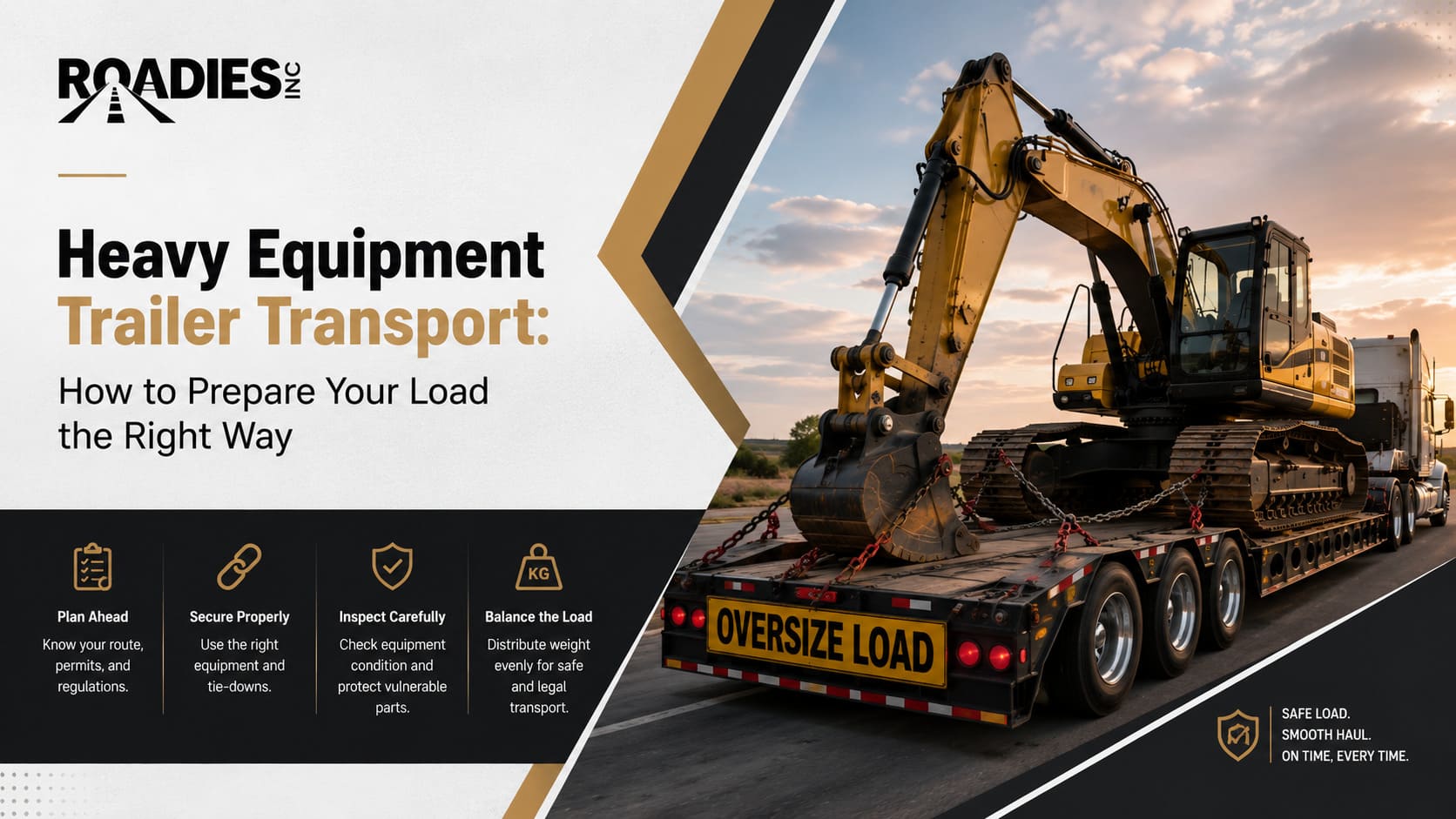
Moving heavy equipment isn’t as simple as driving it onto a trailer and hitting the road. One overlooked prep step, an unsecured load, a missing permit, or the wrong trailer can mean costly delays, DOT fines, or serious damage to your machinery. Heavy equipment trailer transport requires careful planning long before the truck pulls up.
Whether you’re hauling a bulldozer, excavator, or crane, proper preparation is what separates a smooth haul from an expensive headache. This guide walks you through exactly what to do before your equipment leaves the ground.
Why Preparation is Key in Heavy Equipment Hauling
California has some of the strictest road regulations in the country. Caltrans enforces specific rules for oversized and overweight loads, including route restrictions, time-of-day travel windows, and mandatory permits. Beyond legal compliance, a poorly prepped load poses a real safety risk to your driver, other motorists, and the equipment itself. Getting preparation right from the start protects your investment and keeps your project on schedule.
Step 1: Assess Your Equipment’s Dimensions and Weight
Before anything else, measure your equipment accurately: height, width, length, and operating weight. These numbers determine which trailer type you need, whether you require an oversize permit, and what route your driver can legally take.
In California, any load exceeding 8.5 feet wide, 14 feet tall, or 80,000 lbs gross vehicle weight generally requires a Caltrans oversize or overweight permit. Even a few inches of miscalculation can put you out of compliance, so always measure with attachments removed and booms fully retracted.
Step 2: Choose the Right Trailer Type
Picking the wrong trailer is one of the most common and costly mistakes in heavy equipment trailer transport. Here’s a quick breakdown:
- Flatbed trailers: Best for lower-profile equipment with a relatively even base; standard deck height around 5 feet
- Step-deck trailers: Ideal for taller loads that would exceed height limits on a flatbed; the lower rear deck brings height down by about 1–2 feet
- Lowboy trailers: The go-to for the heaviest, tallest machinery like large excavators, cranes, and bulldozers; deck sits just 18–24 inches off the ground
Matching your equipment’s height and weight to the right trailer isn’t just a logistics decision; it’s a safety and compliance requirement. Roadies Inc. offers a range of trailer types and can help you identify the right fit for your specific haul.
Step 3: Inspect and Prep the Equipment
This is where most of the hands-on work happens. Before your equipment is loaded:
- Retract all booms, arms, buckets, and attachments – anything that extends beyond the equipment’s base footprint needs to be pulled in or removed entirely
- Cap all fluid lines and check for leaks – hydraulic fluid or fuel leaking onto the trailer deck is both a hazard and a DOT violation
- Disconnect the battery – especially for hauls lasting more than a few hours, this prevents electrical drain and reduces fire risk
- Lock all doors, compartments, and windows – loose panels that open mid-haul can become road hazards
- Cover the Exhaust – Secure the exhaust stack to prevent “windmilling” damage to the turbocharger during transport.
- Clean off mud, debris, and excess dirt – it adds unaccounted weight, can fall onto the road, and may cause your load to come in overweight at a weigh station
A clean, fully retracted, properly shut-down machine is far easier and safer to load and secure.
Step 4: Secure the Load Correctly
Proper load securement is non-negotiable in heavy equipment hauling. DOT regulations require a minimum number of tie-downs based on the load’s weight and length, and California enforcement officers do check.
- Place chains at designated anchor points on the equipment frame, never on hydraulic lines, cylinders, or thin metal panels
- Use cross-chaining, running chains diagonally from front to rear on both sides, to prevent forward, backward, and lateral movement
- Distribute weight evenly across the trailer deck to avoid overloading one axle
- Use dunnage or blocking under the equipment if needed to prevent shifting on uneven terrain
- Verify chain and binder ratings match or exceed the weight of the load — undersized chains are a violation and a hazard
Double-check all tie-downs before the driver pulls out of the yard.
Step 5: Get Permits and Paperwork in Order
For oversized or overweight loads in California, you’ll need a Caltrans permit before the truck moves. Wide loads (over 14 feet) also require pilot/escort vehicles to lead or follow the haul. Some routes and bridges have specific restrictions that need to be taken into account in planning.
Make sure you have these documents ready:
- Caltrans oversize/overweight permit (if applicable)
- Bill of lading
- Equipment insurance documentation
- Driver’s operating authority and vehicle registration
Also, confirm your loading site has enough flat, stable ground for the trailer to maneuver and load safely. Soft or uneven ground can cause the trailer to shift during loading, a simple issue that’s easy to prevent.
Step 6: Check the Load En Route
Preparation doesn’t stop once the trailer pulls away. Best practice, and in many cases a DOT requirement, is to inspect tie-downs within the first 50 miles, and again every 150 miles or every 3 hours thereafter. Watch for any load shift, especially on highway on-ramps, curves, or rough road surfaces. A quick stop to re-tighten a chain is far less costly than a shifted load or a roadside citation.
Common Mistakes To Avoid During Heavy Equipment Hauling
- Even experienced shippers make these errors, especially under time pressure:
- Skipping accurate measurements and assuming the last haul’s specs still apply
- Choosing a cheaper trailer type that doesn’t suit the equipment’s height or weight
- Missing California permit requirements and getting flagged at a weigh station
- Using chains or binders with insufficient weight ratings
- Loading equipment with mud, debris, or extended attachments still in place
Each of these mistakes can result in delays, fines, re-routing, or equipment damage, none of which are worth the shortcut.
Work With Roadies Inc. for Reliable Trailer Transport Services in California
At Roadies Inc., we specialize in heavy equipment trailer transport across California, from Bakersfield to statewide destinations. Our trailer transport services team understands California DOT and Caltrans regulations inside out, so you’re never left guessing about permits, routes, or compliance. With a full fleet of trailers, we match the right equipment to every job.
Whether it’s a single machine or a multi-unit move, we handle the logistics so you can focus on the work. Contact Roadies Inc. today to get a quote for your next heavy haul.
FAQs: Heavy Equipment Trailer Transport
What type of trailer is best for transporting heavy equipment?
It depends on the equipment’s height and weight. Flatbeds suit lower-profile loads, step-decks handle taller machinery, and lowboys are ideal for the heaviest and tallest equipment, such as cranes and large excavators.
Do I need a permit to transport heavy equipment in California?
Yes, in most cases. California requires a Caltrans permit for loads exceeding 8.5 feet wide, 14 feet tall, or 80,000 lbs gross weight. Wide loads may also require pilot escort vehicles depending on dimensions.
How should heavy equipment be secured on a trailer?
Use properly rated chains and binders at designated anchor points on the equipment frame. Cross-chaining front to rear on both sides prevents forward, backward, and lateral movement. Always verify tie-down ratings match the load weight.
Can Roadies Inc. help with permits for oversized load transport in California?
Yes. Roadies Inc. has extensive experience with California DOT and Caltrans regulations and can assist clients in navigating permit requirements, route planning, and coordinating escort vehicles for oversized or overweight loads across California.
