
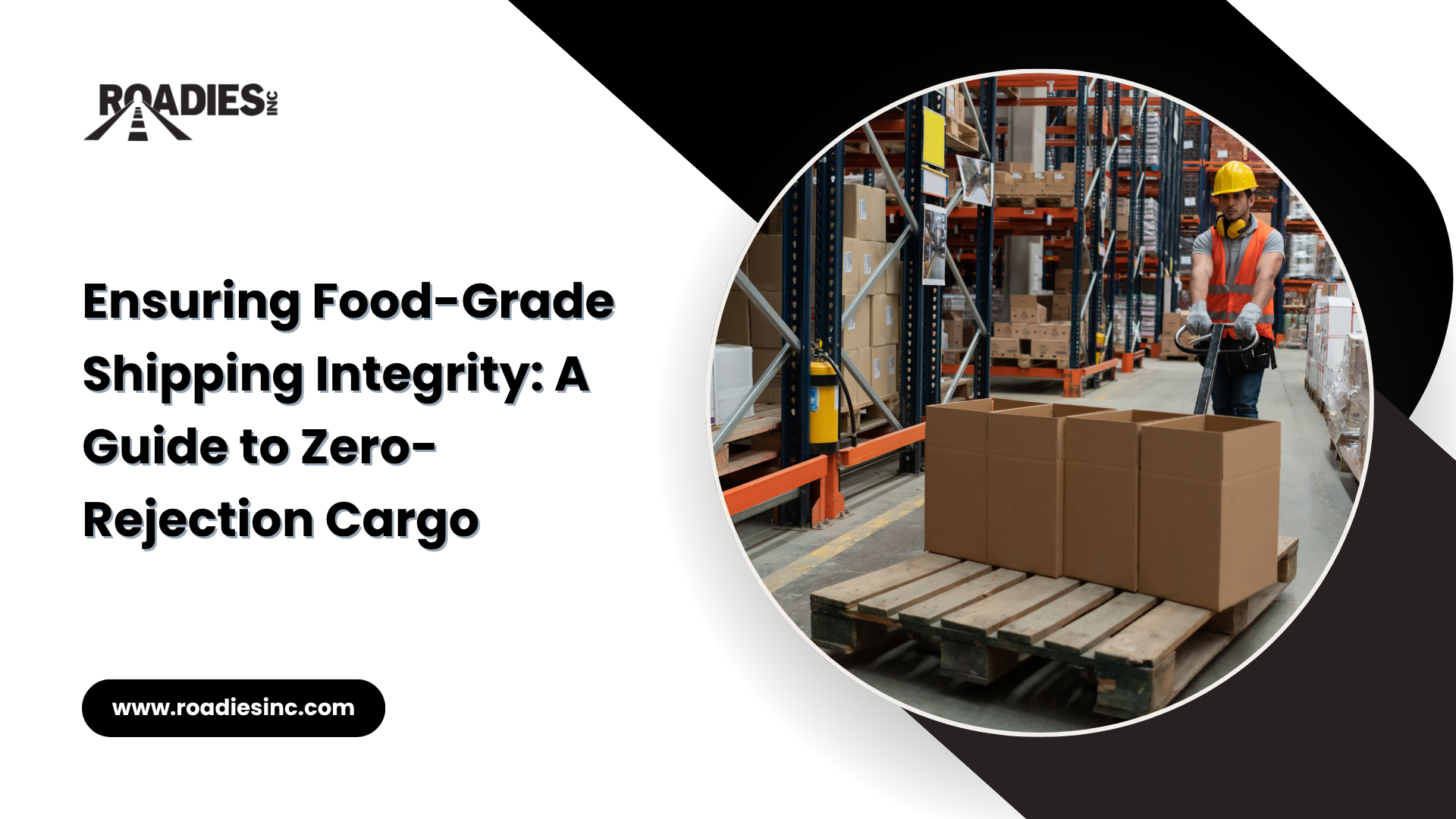
When a food shipment gets rejected at the receiving dock, the fallout is immediate: wasted product, a frustrated client, and a dent in your bottom line that no carrier wants to explain. In food-grade logistics, there is simply no margin for error. A temperature spike during transit, a trailer with lingering odors from a previous load, or a few crushed cases on a pallet can easily result in a full load refusal.
The good news? Zero-rejection cargo is completely achievable. It requires the right shipping carrier, the right equipment, and a clear understanding of what successful food-grade transportation actually demands – from the loading dock to the final delivery.
What Makes Food Grade Logistics Different?
Not every shipment that carries food qualifies as food-grade logistics. True food-grade transportation goes well beyond simply moving edible products from point A to point B. It involves strict sanitary equipment standards, detailed pre-trip protocols, documented temperature compliance, and consistent regulatory adherence throughout the entire supply chain.
The FDA’s FSMA Sanitary Transportation Rule (part of the Food Safety Modernization Act) sets binding federal requirements for carriers transporting human and animal food. These regulations govern everything from trailer cleanliness and temperature controls to training requirements for drivers and logistics personnel. Non-compliance isn’t just a client relationship issue; it can result in regulatory penalties.
It’s also worth distinguishing between the two main categories of food-grade freight:
- Ambient (dry van) food-grade: Packaged goods, dry ingredients, canned products – these require sanitary trailers but don’t need active refrigeration.
- Refrigerated food-grade: Fresh produce, dairy, meat, juices, and other perishables – these require reefer trailers with precise, continuous temperature control.
Both categories share the same zero-tolerance standard for contamination, but refrigerated freight adds an additional layer of risk that demands tighter cold chain management.
Top 3 Causes of Cargo Rejection And How to Avoid Them
Understanding why loads get rejected is the fastest way to prevent the issue. Across the industry, three issues account for most food shipment refusals.
Temperature Deviations in the Cold Chain
Temperature abuse is the leading cause of rejected refrigerated freight. Even a brief deviation — say, a trailer that wasn’t pre-cooled before loading — can be enough for a receiver to turn a shipment away. Once a temperature excursion appears on a data logger, there is no arguing the point.
Preventing this starts before the product ever gets loaded. Trailers should be pre-cooled to the required set-point at least 1 hour prior to loading to ensure strict cold-chain compliance. Real-time cargo monitoring devices should be in place for every shipment, with temperature logs shared proactively with the receiver. For sensitive loads, continuous data recorders, not just spot checks, are the standard.
Cross-Contamination and Odors
A trailer that previously hauled tires, chemicals, fertilizer, or strongly scented produce can contaminate the next load simply through residual odor or microscopic residue. Many receiving teams conduct odor inspections before accepting any food shipment, and they have every right to reject a load based solely on smell.
Proper washout protocols between loads are non-negotiable for food-grade carriers. This means hot-water rinses, deodorizing washes where necessary, and a physical inspection of walls, floors, and door seals for signs of prior contamination. Carriers operating under documented trailer washout protocols and food safety certifications like HACCP add an extra layer of accountability that shippers and receivers both value.
Packaging and Load Shift Damage
A shipment can maintain perfect temperature all the way to its destination and still be rejected if the product arrives damaged. Crushed cases, torn shrink wrap, or product that has shifted and toppled during transit signal improper loading practices — and raise legitimate food safety questions.
Proper palletization, secure strapping, edge protectors, and the right dunnage for the freight type are essential. Carriers and shippers share responsibility here. If the load isn’t built to survive the road, it won’t survive the receiving dock inspection either.
Best Practices for Sanitary Cargo Transport
Preventing rejection is not a one-step fix. It is a system, and every checkpoint in the process matters.
Equipment Audits Before Every Load
Before a food-grade trailer is loaded, the interior should be inspected for leaks, pest activity, splinters, intact door seals, and any signs of previous load residue. Drivers and dispatchers should document this inspection. A trailer that doesn’t pass shouldn’t move food.
Driver and Dispatcher Training
HACCP (Hazard Analysis and Critical Control Points) is not just a concept for food processors. Drivers operating food-grade routes need to understand temperature setpoints, when to call in an equipment issue, and how to handle a refrigeration unit malfunction mid-transit. Trained drivers are among the most underrated risk-management tools in food-grade logistics.
Clear and Detailed Documentation
Every food-grade shipment should travel with a bill of lading (BoL) that explicitly states temperature requirements, handling instructions, and contact protocols for exceptions. Vague documentation creates gaps that increase the risk of rejection. When everyone in the chain has the same clear instructions, the shipment has a much better chance of arriving accepted.
The Role of Cross-Docking in Food Shipment Spoilage Prevention
One of the most effective but often underutilized strategies in food-grade logistics is food-grade cross-docking — and for temperature-sensitive freight, it can make a significant difference.
Cross-docking routes inbound freight directly from arrival trailers to outbound trailers, with minimal or no intermediate storage time. For food shipments, this means the product spends far less time in ambient conditions, reducing both spoilage risk and the number of times the freight is handled. Fewer touches mean fewer opportunities for load damage, contamination, or temperature deviation.
In a properly run food-grade cross-docking facility, the dock area itself is temperature-managed, inbound loads are inspected immediately upon arrival, and outbound staging is tightly timed to prevent product from sitting idle. This dock-to-dock model is particularly effective for high-turnover perishables like dairy, fresh produce, and packaged refrigerated goods.
For shippers who prioritize delivery speed and product integrity equally, partnering with a logistics provider that offers cross-docking service is a strategic advantage — not just a convenience.
Choosing the Right Logistics Partner for Cargo Rejection Prevention
Not all carriers advertising food-grade capabilities actually operate at that standard. When evaluating a logistics partner, shippers should go beyond price and ask the right questions:
- Equipment age and maintenance records: Modern reefer units with consistent service histories reduce the risk of mid-transit equipment failure.
- Trailer washout policies: Does the carrier have a documented protocol, or is it left to the driver’s discretion?
- Temperature monitoring technology: Are real-time trackers standard on every food-grade load, or only on request?
- Compliance track record: Can the carrier demonstrate FSMA compliance and provide documentation on request?
- Cross-docking capabilities: Can they minimize dwell time and offer dock-level temperature continuity?
Choosing a carrier that treats food safety compliance as a baseline, not a premium add-on, is the most reliable way to prevent cargo rejection.
Protect Your Food Grade Freight with Roadies Inc.
At Roadies Inc., we understand that food-grade shippers can’t afford surprises. Our team operates under strict sanitation standards, well-maintained equipment, and documented compliance protocols that meet refrigerated and ambient food-grade freight requirements.
Our cross-docking and freight services in California are designed for time-sensitive shipments that require rapid movement without compromising product integrity. Whether you’re moving fresh produce, packaged food, or other perishables, we treat every load like the next one matters — because it does.
Don’t leave your food-grade shipments to chance. Contact Roadies Inc. today for a custom freight quote and experience zero-rejection logistics from dock to delivery.
FAQs About Food Grade Logistics
What is food-grade logistics?
It is the specialized management, warehousing, and transportation of food products under strict sanitary, temperature-controlled, and FDA-compliant conditions. The goal is to ensure consumer safety by preventing cross-contamination and spoilage.
What is the most common cause of food cargo rejection?
Temperature control failure is the leading cause for rejection in refrigerated shipments. If the continuous temperature log shows the cargo deviated from the required set-point during transit, receivers will reject the load due to spoilage risks and safety hazards.
What are the requirements of the FSMA Sanitary Transportation Rule?
This FDA rule mandates strict practices for shippers, loaders, carriers, and receivers. It requires vehicles and equipment to be cleanable and capable of maintaining proper temperatures, establishes operations to prevent cross-contamination, mandates food safety training for personnel, and requires maintenance of written records for up to 12 months.
Why do food-grade trailers need documented washouts?
Documented washouts prove the trailer was properly sanitized before loading. Without this proof, receivers may reject the freight, fearing residual odors, chemicals, pests, or allergens from previous shipments could contaminate the current food load.
Can broken trailer seals lead to cargo rejection?
Yes. If a trailer seal is broken, missing, or does not match the Bill of Lading upon delivery, the receiver will often reject the shipment because a broken seal indicates the freight may have been tampered with or exposed during transit.
